Why we exist
“Made in Germany” was once a warning
Philadelphia, June 1876. At the World’s Fair, German industry performs poorly. The mechanical engineer Franz Reuleaux sits on the jury and writes letters for the Berlin National-Zeitung.2 In the first one, he sums up what the critics are saying:
“German industry’s basic principle is ‘cheap and nasty’.”

Reuleaux does not disagree. Unfortunately, he writes, on average it is true. He wishes that many German industrialists would come over to see “how much we have to learn and how much we have to forget”.1 At home, some come close to calling him a traitor; Werner von Siemens praises him for speaking plainly. In September 1876, Reuleaux petitions the Imperial Chancellery for a patent law and better industrial training, among other things.2 In May 1877, the German Empire gets a uniform patent law.3
Eleven years later, Britain draws a line. The Merchandise Marks Act of 1887 requires foreign goods bearing a British name or mark to state clearly where they were made.4 The law is meant to reduce demand for foreign, and above all German, goods.5 German products now often carry the words: Made in Germany. It is meant as a warning.7
Things turn out differently. As early as 1896, the Briton Ernest Edwin Williams complains that the label works like free advertising for German goods.6 In 1902, an Austrian trade journal writes, in essence: the stamp was meant to deter and has become a recommendation.5 In the same decades, Germany founds the Imperial Physical and Technical Institute (1887), the Deutscher Werkbund (1907) and the German industry standards committee, today’s DIN (1917).8,9,10 The warning becomes a seal of quality.7
Four countries, one pattern?
Japan and South Korea also needed several attempts before their cars caught on. China’s chapter is still being written.
Japan
1958 to today
- 1958
Toyota brings the Crown to the USA. At speed it lacks power, it is noisy and it vibrates. In 1960 Toyota stops exporting it.11,12
- 1968
The Corolla goes on export. By 1969, Toyota’s US exports rise from 98,000 to 155,000 cars.13
- 1980
Around one in ten new cars in West Germany is Japanese, twice as many as the year before.14
- Today
Toyota is the world’s largest carmaker by volume.15
- 1958
South Korea
1986 to today
- 1986
Hyundai launches the Excel in the USA: 168,882 cars in the first year, a record for an importer. Then rust and quality problems damage its reputation.16,17
- 1998
Hyundai’s US arm calls it the worst year in its history. The response: up to ten years or 100,000 miles of warranty, and better cars.18
- 2004
In a major US quality study, Korean brands rank ahead of European and American brands for the first time.19
- 2022
The Kia EV6 becomes Europe’s Car of the Year.20
- 1986
China
since 2005
- 2005
The Landwind SUV in the ADAC and ÖAMTC crash test: the A-pillar moves back almost 30 centimetres. “There is no survival space left for the driver,” writes ÖAMTC. No car had ever done so badly in an ADAC test.21,22
- 2024
The ADAC analyses 13 Chinese models tested over three years. All but two have five Euro NCAP stars. “Chinese manufacturers have caught up strongly in recent years,” says ADAC technical president Karsten Schulze.23
- 2026
Car reviewers praise the materials. Testing the Avatr 07, Carscoops is impressed by “the sheer quality of it all”: Nappa leather, microfibre suede, no shiny or creaky plastics. In the reviewer’s view, the overall quality gives established premium manufacturers something to think about.30
To be continued
- 2005
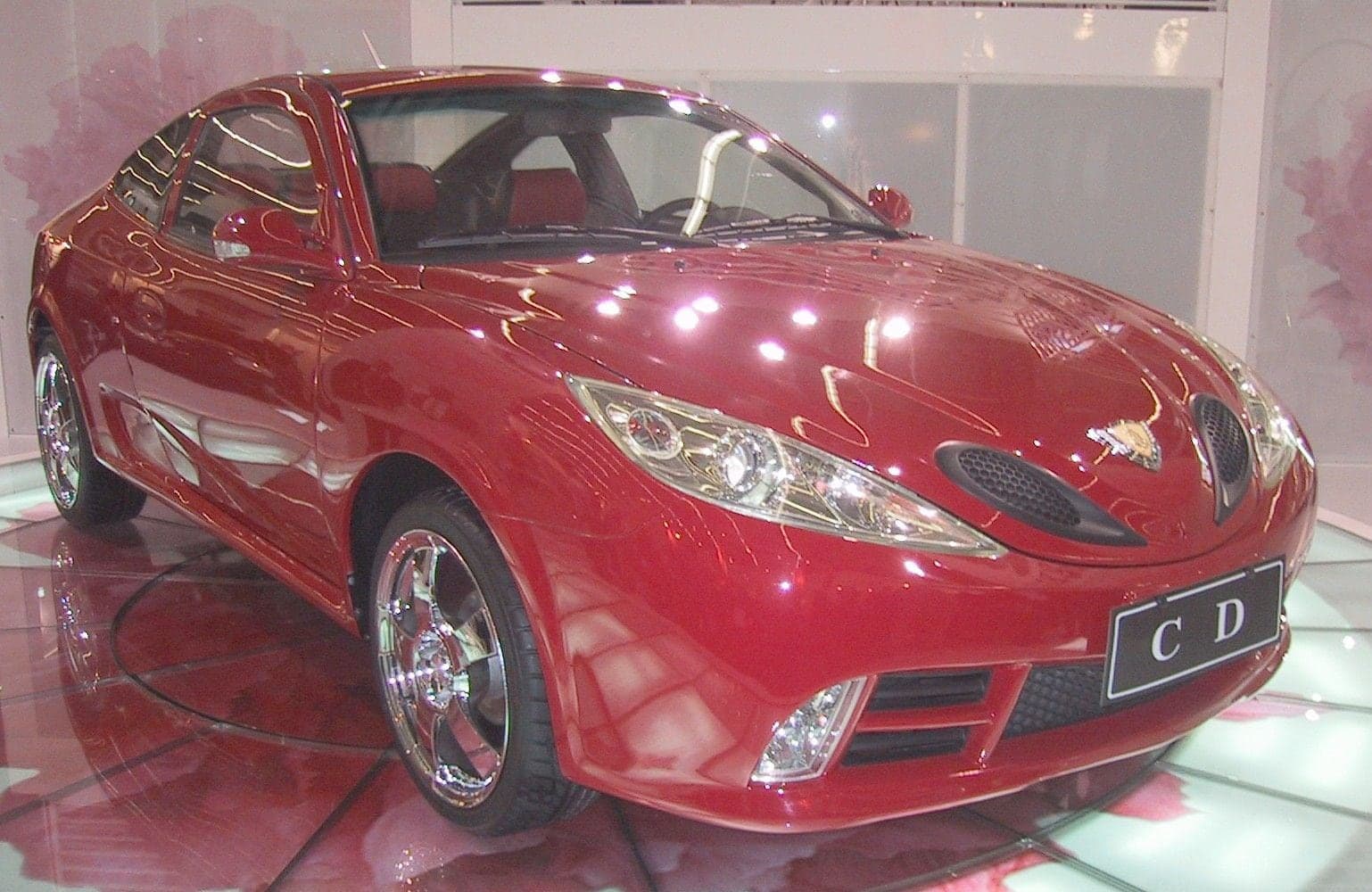 2005
IAA 2005 in Frankfurt: Geely shows the CD sports coupé.
Foto: Chris 73 / Wikimedia Commons · CC BY-SA 3.0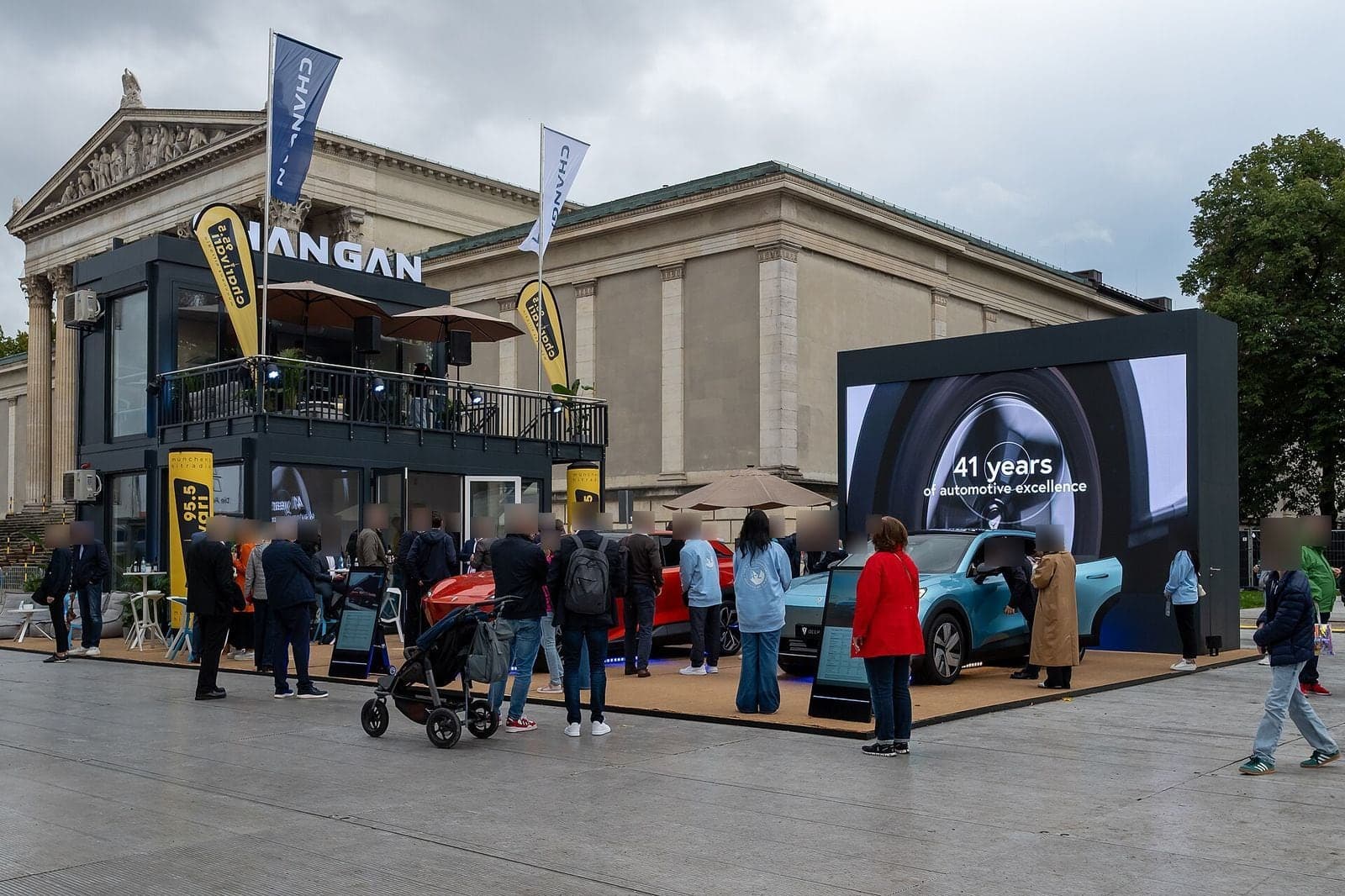 2025
IAA Mobility 2025 in Munich: the Changan pavilion on Königsplatz.
Foto: Matti Blume / Wikimedia Commons, Gesichter unkenntlich gemacht · CC BY-SA 4.0
From our data
And today?
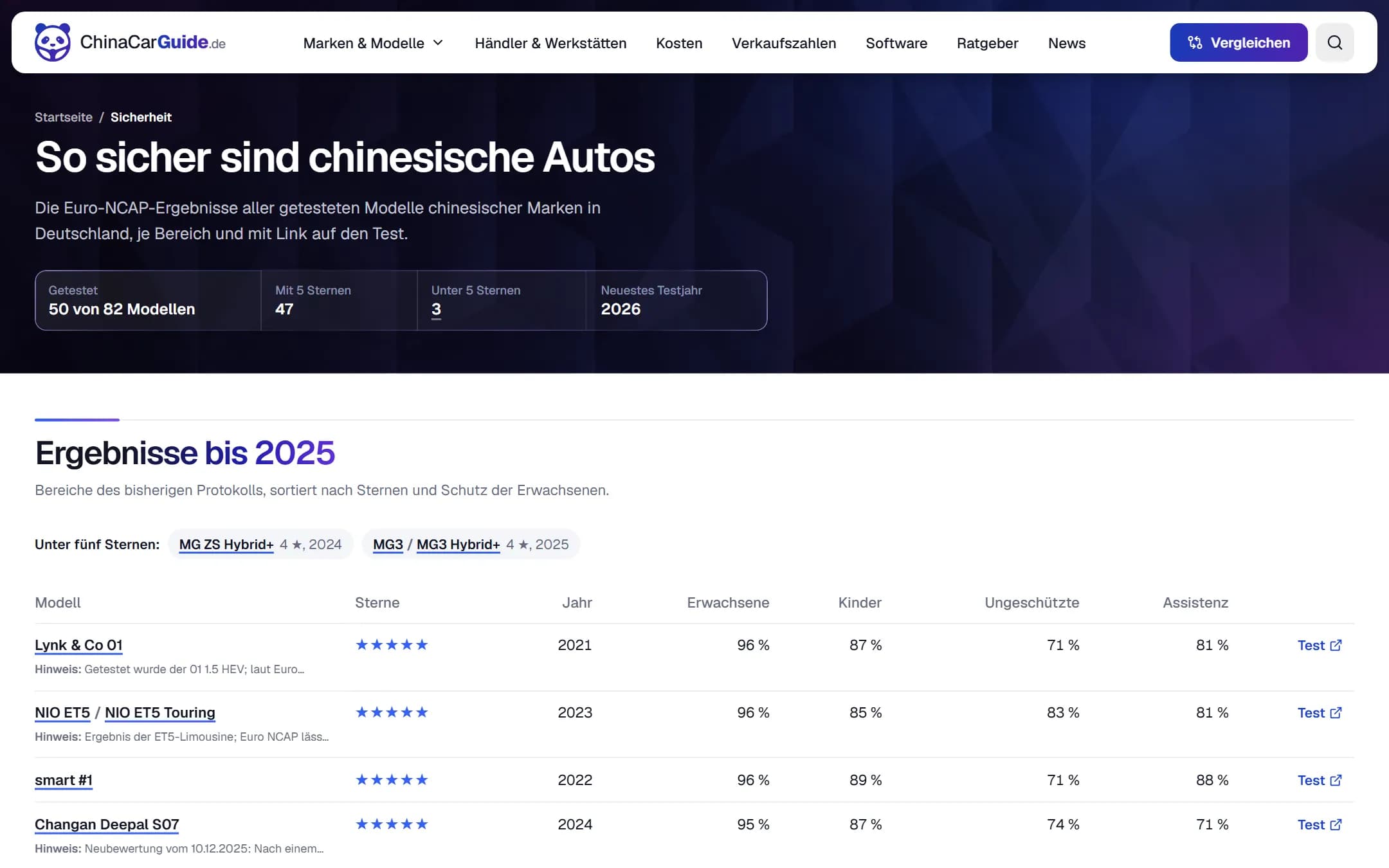
47 of 50
models with a Euro NCAP result have five stars, tests from 2021 to 2026.
2–8 years
vehicle warranty, depending on the brand.
Sources: Euro NCAP, our own count; warranty according to the manufacturers.24
What the comparison doesn’t tell you
A pattern is not a forecast. And good crash tests don’t answer every question.
Software and data.
Connected cars raise questions that did not exist in 1887. In the USA, manufacturers under Chinese or Russian control may no longer sell connected cars from model year 2027, on the grounds of possible data transfers and remote access.28
Driver assistance and controls.
In 2024 the ADAC found traffic sign recognition, lane keeping and distance control often unreliable, along with complicated touch menus, software bugs and wrong translations.23
Workshops and parts.
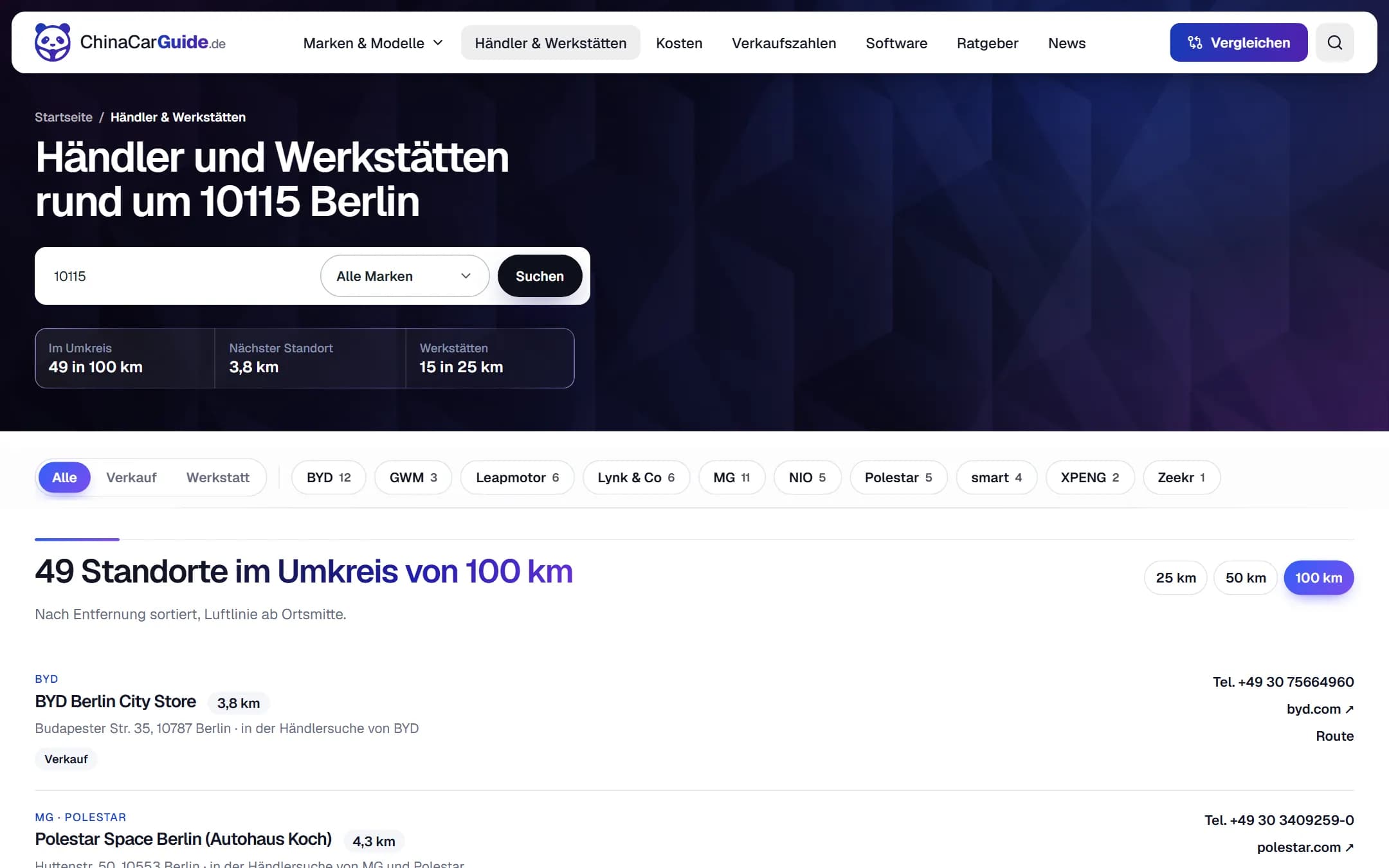
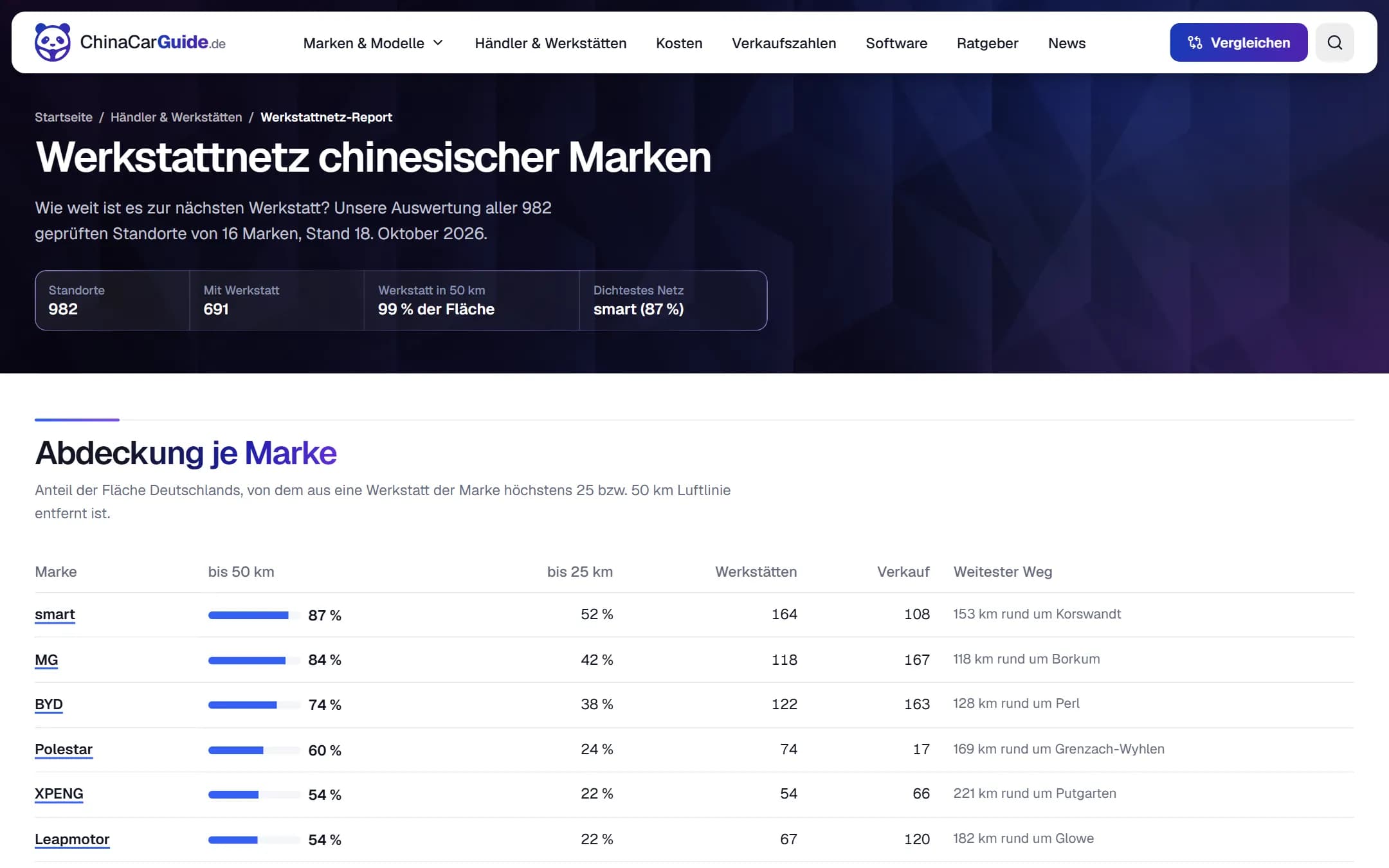
Networks differ widely by brand: in our directory they range from 4 locations for Denza to 177 for MG.
Brands come and go.
Aiways registered 50 cars in Germany in 2023 and none in 2025.25 This is not unique to Chinese brands: General Motors took Chevrolet out of Europe’s mass market by the end of 2015 and promised continued warranty, parts and service.29
Tariffs.
Since 30 October 2024, the EU has levied countervailing duties on electric cars from China for five years, between 7.8 and 35.3 per cent depending on the manufacturer. Hybrids and combustion cars are not affected.26,27
Our conclusion
A label tells you where a car comes from.
Not what it’s worth.
That is why China Car Guide exists. We look at every model individually, with figures and sources, even when the result is uncomfortable.